10 Best Cryptocurrency Payment Gateways For Business (2026)
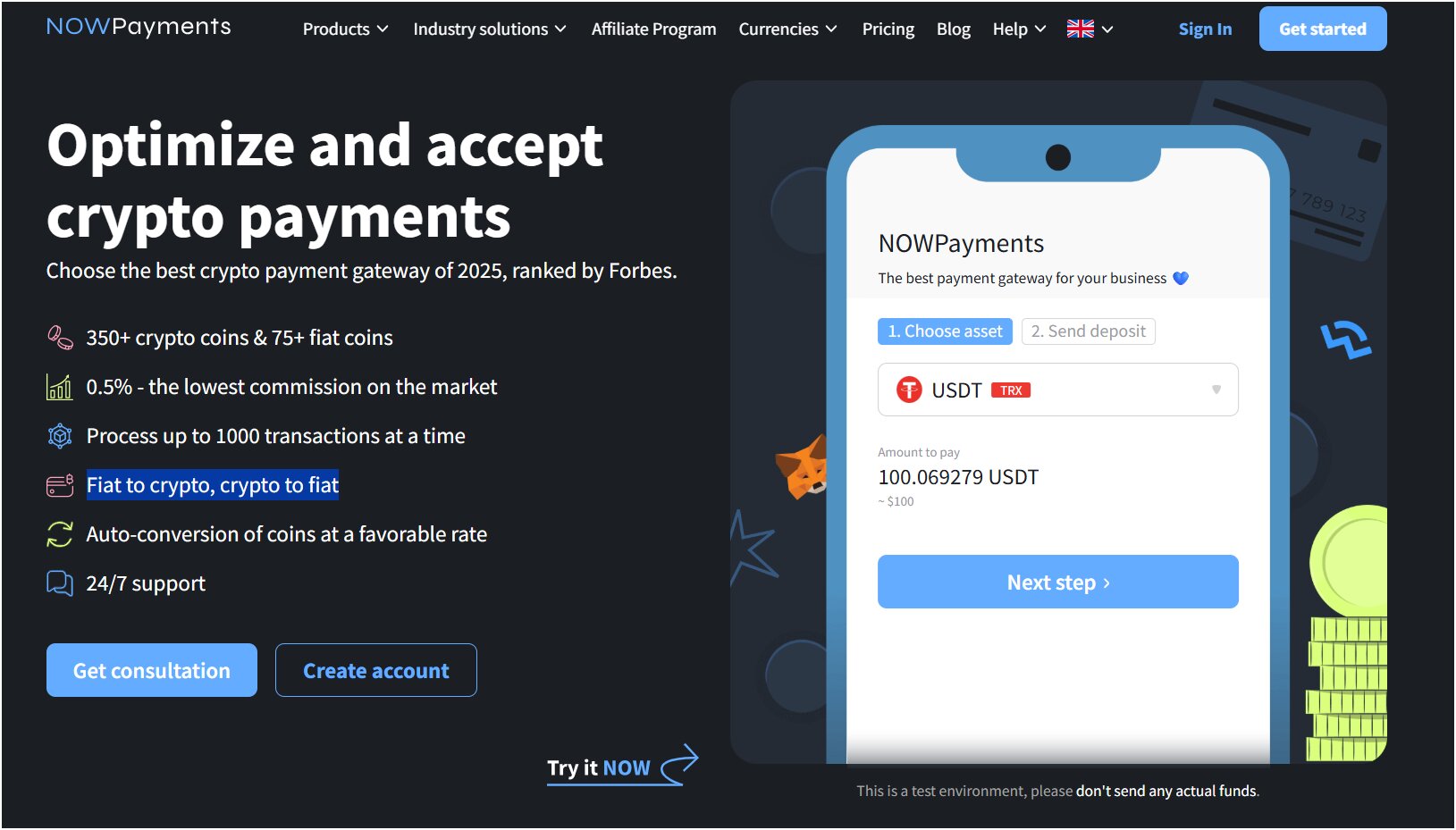
A crypto payment gateway is a service that allows you to accept Bitcoin, stablecoins, and other cryptocurrencies from customers and receive them securely in your wallet or bank account.
The best crypto payment gateways are NOWPayments, Coinbase Commerce, Binance Pay, CoinGate, BitPay, Triple A, CoinsPaid, BVNK, Stripe (Bridge), and CoinRemitter due to their low fees, strong security, wide crypto support, easy integrations, and reliable fiat settlement options.
In this guide, we will review the top 10 best cryptocurrency payment gateways for business and compare their fees, supported coins, settlement options, and key features. You will also learn how crypto payment gateways work, how much they cost, and how to choose the right one for your business.
1. NOWPayments: Best USDT and Altcoins Payment Gateway
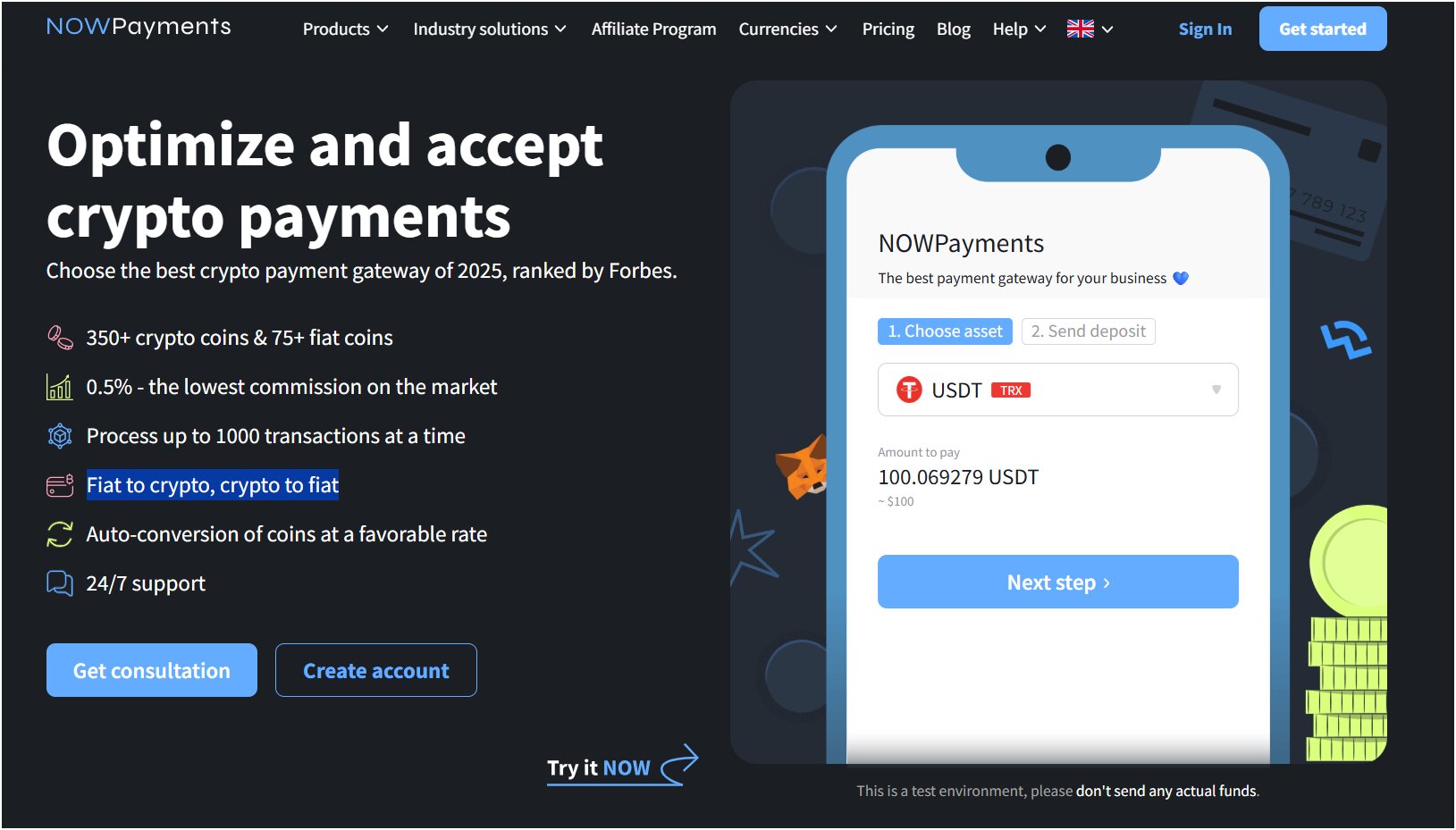
NOWPayments is a non-custodial crypto payment gateway that lets you accept over 350 different digital assets without ever taking control of your private keys. The platform charges a low service fee, and the published pricing splits it into two simple cases: around 0.5% for same-coin payments and around 1% when you auto-convert what the customer pays into the coin you want to receive.
You also get practical commerce tools like an API, plugins, and invoices, so you can handle both checkout and “pay this invoice” flows without changing your gateway. You can just use their pre-made plugins for Shopify, WooCommerce, or Magento to start taking payments in minutes. The speed part depends on the chain, yet the platform itself points to about a 5‑minute average transaction time, and it also says you can process up to 1,000 transactions at a time.
Pros of NOWPayments
- It supports a very large set of coins (350+), so you rarely hear “my coin is not supported”
- The platform keeps the gateway very low (0.5%), and you only pay the higher tier when you use conversion
- You can plug it into common checkout flows through ready tools, instead of building everything from scratch
- The payment gateways support easy conversion of fiat to crypto or crypto to fiat
Cons of NOWPayments
- You still need to pay network fees on many chains, so your “all-in cost” can jump on busier networks
- Conversion fees can sometimes be on the higher side (1% flat), compared to traditional exchanges

2. Coinbase Commerce: Best Self-Custody Crypto Payment Solution

Coinbase Commerce provides a professional way for you to accept crypto while maintaining total control over your funds through a self-custody model. The platform charges a flat 1% transaction fee, and this is quite straightforward for your accounting team to track.
You don’t even need a traditional bank account to get started because the system works directly with your own digital wallet from the start. You can start with a clear set of supported assets on the self-managed side, like Bitcoin, Ethereum, USDC, USDT, and a handful of other coins, plus extra support for assets on Polygon.
Actually, the integration is also very smooth, and you can create hosted checkout pages that look great on both mobile phones and desktop computers. Okay, one important detail matters for real-life checkout: some coins like Bitcoin and Dogecoin can no longer be paid from a self-custodial wallet or a third‑party exchange under the newer protocol flow.
Pros of Coinbase Commerce
- You can set a deposit address that points to a self-custody wallet or your exchange wallet, so you pick your own risk level
- You can grow into a broader “pay with many assets” setup through the protocol approach
- It offers real-time transaction validation for immediate customer assurance
- Coinbase Commerce automatically converts your client’s chosen currency to USDC
Cons of Coinbase Commerce
- You may see extra customer friction for certain coins under the newer payment flow, depending on where the customer holds funds
- You need to plan for changes in the merchant product lineup because the tools are evolving
3. Binance Pay: Best Crypto Payment App for Global Merchants

Binance Pay is a contactless, borderless, and secure user-to-user cryptocurrency payment feature that allows you to pay and get paid in crypto around the globe. The platform is part of the massive Binance ecosystem, and this means you get access to millions of active users who already have the Binance app on their phones.
Generally, merchants love this because it offers 0% fees for many transactions that happen within the Binance system. This is a bit of a game-changer for high-volume stores that want to maximize their profit margins.
Right now, you can use QR codes to let people pay you instantly at a checkout counter or on a website page. The platform supports more than 100 cryptocurrencies, and your customers will almost always find a coin they already own in their app. You can also use the Merchant Management Platform to see all your data and handle refunds or manage your team members with different access levels. You can read more about what Binance Pay is and how it works here.
Pros of Binance Pay
- It offers a fast “scan and pay” flow that is familiar to many crypto users
- You often see very low direct fees on “pay-in flows” (0% mostly), compared with card processing
- The gateway avoids classic card chargebacks, so you reduce one big fraud headache
- Over 100+ Cryptocurrencies are supported for merchant payments, including USDC, USDT, BNB, BTC, and ETH
- To pay or send crypto, you simply need to type or paste your recipient’s Binance ID, email, or phone number
Cons of Binance Pay
- You rely on the user being in the ecosystem, so conversion can drop when your buyer does not have a Binance account there
- You should verify regional availability and compliance limits, because some features can vary by country (mostly unavailable in the US)
4. CoinGate: Best Bitcoin and Altcoins Payment Processor

CoinGate offers a straightforward “accept crypto, settle in fiat” setup that helps you avoid price swings while still letting customers pay in coins they already hold. The platform charges a standard fee of 1%, and it is well-known for being very reliable when it comes to processing Bitcoin and various altcoins. You can choose to receive your payouts in crypto, or you can have the platform convert everything to Euros or US Dollars and send it to your bank.
Actually, the platform has been around for a long time and has built some really solid tools, like a billing system for recurring payments. Plus, if you run a subscription service, this is a great choice because they are working on on-chain subscriptions as well. You will also get tools that feel “e-commerce ready,” like checkout pages, billing links, refunds, and a big set of plugins for store builders.
Pros of CoinGate
- You have to pay a single published processing fee (1%) in the standard plan, so planning is easier.
- It securely accepts Bitcoin, USDC, and other leading cryptocurrencies globally and is chargeback-free
- You can also choose to instantly settle your funds into EUR, GBP, or USD
- Set up periodic auto withdrawals from your CoinGate account to a bank account
Cons of CoinGate
- You still need to deal with network fees on on-chain payments, so customer cost can vary by coin and chain
- You need to set your refund rules clearly, because crypto payments do not work like card chargebacks
5. BitPay: Best Bitcoin Payment Processing Provider for Enterprises

BitPay is an enterprise-style payment processor that focuses on bank settlement, KYC controls, and clear workflows like invoicing and refunds. The platform uses tiered pricing based on your monthly volume, and the published merchant pricing ranges from 2% + $0.25 at lower volume to 1% + $0.25 at $1 million+ monthly volume.
You also get a very clear flow: the service creates an invoice, locks an exchange rate for the customer, converts the payment, and then initiates a bank settlement. They have some of the best fraud prevention tools in the industry, which keep your revenue safe from malicious actors.
Well, BitPay supports settlements in several fiat currencies like USD, EUR, and GBP. They deposit the money directly into your bank account, so you don’t even have to touch the crypto if you don’t want to. You can also use their email billing tools to send invoices to clients who are located in other countries.
Pros of BitPay
- BitPay is highly popular and the most established name in Bitcoin payment processing today.
- It offers professional bank settlements in major global fiat currencies daily
- You can scale into lower fee tiers as volume grows
- Protect your business with enterprise-grade security and fraud prevention tools
- You can easily generate tax-compliant reports that satisfy your company’s accounting department
Cons of BitPay
- You have to submit extensive documentation to pass the strict KYC approval process
- Offer fewer altcoin choices to customers compared to smaller gateways
- You need to understand settlement minimums and timing, because the platform can apply minimum settlement amounts depending on the currency
6. Triple A: Best B2B Crypto Payment Gateway for Regulated Businesses

Triple-A is a licensed and regulated crypto payment gateway that focuses specifically on the needs of B2B companies and large-scale merchants. The platform allows you to accept crypto payments and receive the funds in your local currency the very next day. You don’t have to worry about the volatile prices of Bitcoin because Triple-A locks in the exchange rate at the moment of the transaction.
The company states it is licensed as a Major Payment Institution by the Monetary Authority of Singapore, and it publishes a license number on its site. It offers locked-in exchange rates and T+1 settlement in selected local currencies, and it lists supported assets like Bitcoin, Lightning Bitcoin, Ethereum, USDC, and USDT.
You can integrate their API into your existing checkout flow or use their simple no-code payment links. Basically, it acts like a traditional payment processor but for the crypto world. It makes it very easy for your accounting team to handle the books without needing to learn about blockchain explorers.
Pros of Triple-A
- Lock in exchange rates to avoid any crypto price volatility
- Operate safely with full regulatory licenses from Singapore and Europe
- It accepts major payment coins like USDT and USDC, not just Bitcoin
- Receive local bank transfers the next business day after sales
- Use no-code payment links for simple B2B invoicing and collections
Cons of Triple-A
- It mainly focuses on large businesses rather than small startup shops
- Charge higher fees for international bank settlements outside the main regions
7. CoinsPaid: Best Crypto Payments Processor for High-Volume Businesses

CoinsPaid is an enterprise-grade processor that is built for heavy flow, so it tends to fit you better when you run many transactions, higher ticket sizes, or “high-risk” online verticals. The platform highlights support for 20+ widely used cryptocurrencies and automatic conversion into 40+ fiat currencies.
You get access to features like mass payouts. Well, it allows you to send up to 100 payments at once just by uploading a simple CSV file. You see, this is perfect for paying affiliates or global vendors without spending hours on individual transfers.
Well, the fees are usually under 1%, and they can go even lower if you have a lot of transactions every month. The platform is also famous for its high uptime and fast processing speeds, and these are really important if you have thousands of customers paying at the same time. They also provide detailed SLA guarantees to ensure your business stays online 24/7 without any interruptions.
Pros of CoinsPaid
- Handle massive transaction volumes with guaranteed high platform uptime performance
- Automate affiliate payments with powerful and efficient mass payout tools
- Manage 20+ coins and 40+ fiat currencies in one dashboard
- It offers professional 24/7 support for all your technical business needs
- You can keep price swings low with an exchange-rate lock and auto conversion
Cons of CoinsPaid
- It generally offers integration via complex APIs that require experienced software developers’ time
- You still need KYB/AML onboarding and ongoing monitoring, so setup can feel heavier than a simple plugin gateway
8. BVNK: Best Crypto-to-Fiat Payment Gateway Solution for Fintechs

BVNK is a stablecoin-first rail that is designed for “money movement,” so it fits you best when you need crypto-to-fiat conversion plus real banking rails in one place. You can use their API to build your own custom payment experiences for your customers without having to worry about the underlying blockchain tech.
Actually, BVNK is perfect for businesses that move at least $500,000 a month because they offer bespoke pricing and dedicated account managers. The platform is ISO 27001 certified, and this means they follow the highest standards for data security in the world. You can accept payments in stablecoins and have them settled into your bank via SEPA or SWIFT rails almost instantly.
Pros of BVNK
- Bridge traditional banking and crypto using advanced unified ledger technology
- Hold fiat and crypto in secure multi-currency virtual bank accounts
- Rely on high-level security with official ISO 27001 data certification
- Utilize specialized infrastructure built specifically for modern fintech company needs
- You can run a 24/7 conversion and stablecoin movement while still tapping normal bank rails for payouts
Cons of BVNK
- You need onboarding and compliance workflows, so setup can require real implementation time
- You must treat pricing as quote-based and confirm the full fee stack, including network fees for external payouts
9. Stripe (Bridge): Best USDC Payment Gateway for Websites

Stripe has officially entered the crypto space in a big way by using Bridge technology to allow businesses to accept USDC stablecoin payments. You know, the platform is already used by millions of websites, and so adding crypto is just a matter of clicking a few buttons in your existing Stripe dashboard. You can accept USDC on networks like Ethereum, Solana, and Polygon. The money gets converted to your local currency just like a regular credit card payment would.
The best thing about Stripe is that you don’t have to learn a new system if you are already using it for your store. The fees are obviously high (2.9%), but the user experience is world-class, so your customers won’t feel confused when they try to pay you. Plus, Stripe handles all the fraud protection and compliance stuff for you, and this saves a lot of time and stress.
Pros of Stripe
- You can enable crypto payments instantly inside your existing Stripe merchant dashboard
- It offers customers a familiar and trusted world-class checkout experience easily
- You can easily automate all your sales tax and compliance reporting with Stripe
- Accept stablecoins on Solana and Polygon for very low costs
- You can add stablecoin payments to products like Checkout, Elements, Billing, and Connect
Cons of Stripe
- You must confirm eligibility, because direct stablecoin payment acceptance is limited to US businesses
- You need to manage refunds as stablecoin sends, not as card-style reversals
- Limit your cryptocurrency acceptance to only the USDC stablecoin for now
10. CoinRemitter: Best Low-Fee Bitcoin and Ethereum Payment Gateway

CoinRemitter has a low platform fee model that can feel great when you mainly want to accept crypto and withdraw it to your own wallet without extra conversion steps. It charges a 0.23% processing fee, and it frames that fee around withdrawals rather than charging you just to “receive” into an internal wallet.
You will also see the fee setup spelled out in the terms: a Free Plan with a $0 subscription fee and a Premium Plan at $99.99 per month, while the processing fee stays at 0.23% in both plans. You can accept Bitcoin, Ethereum, Litecoin, and several other major coins with very simple API integrations or plugins for platforms like WordPress.
Pros of CoinRemitter
- You need to pay the lowest transaction fees in the industry at 0.23%
- You can start accepting payments quickly with a very simple registration process
- Store your funds safely in a free built-in digital wallet
- You can install simple plugins for WordPress or Magento in a few minutes
Cons of CoinRemitter
- You have to manage your own security since the platform has fewer guards
- You do not get native fiat payouts, so you need your own off-ramp or exchange process
- You will generally experience slower customer support because the team is very small currently
What Are The Best Payment Gateways For Crypto?
The best payment gateways for crypto are the specialized platforms that offer a balance between security, low fees, and diverse coin support. You need a gateway that can handle high traffic without crashing and one that offers automatic conversion to fiat currency to avoid price volatility.
Now, for most businesses, the top choices are NOWPayments for its low fees and BitPay for its enterprise-level security and compliance features. You should also consider Stripe if you want the easiest integration with your existing website. Here is a quick comparison between all top crypto payment gateways:
| Payment Processor | Best For | Supported Coins | Fees | Direct Bank Withdrawals | API Access |
| NOWPayments | USDT & Altcoins | 350+ Assets | 0.5% | Yes | Full API |
| Coinbase Commerce | Self-Custody | Major Assets | 1.0% | Yes | Full API |
| Binance Pay | Global App Users | 100+ Assets | 0.0% – 1.0% | Yes | Full API |
| CoinGate | BTC & Altcoins | 70+ Assets | 1.0% | Yes | Full API |
| BitPay | Enterprises | Major Assets | 1.0% – 2.0% | Yes | Full API |
| Triple-A | B2B Regulated | Top Assets | Custom | Yes | Full API |
| CoinsPaid | High-Volume | 50+ Assets | ~1,0% | Yes | Full API |
| BVNK | Fintechs | Major Assets | Custom | Yes | Full API |
| Stripe (Bridge) | Website USDC | USDC Only | ~2.9% | Yes | Full API |
| CoinRemitter | Low Budget | Main Assets | 0.23% | No | Full API |
Step-by-Step Process of a Crypto Payment Gateway
Crypto payment gateways work by acting as a digital intermediary that manages the complex communication between a blockchain network and your store’s checkout page during a sale.
Basically, when a customer chooses to pay with crypto, the gateway instantly generates a unique digital wallet address and a QR code specifically for that single order. The customer then sends the exact amount of funds from their personal wallet, and the gateway system monitors the blockchain to confirm the transaction is valid and permanent. Now, once the network confirms the payment has been sent, the gateway sends a real-time notification to your website so you can mark the order as “Paid” and fulfill the request.
A typical flow looks like this:
- You create a payment request, like an invoice, a checkout session, or a payment link.
- The gateway shows a wallet address and amount, often with a QR code and a short time window.
- Your customer sends the crypto from a wallet, and the network confirms it.
- The gateway marks the payment as complete and tells your site with a redirect and a webhook.
- You settle funds. You might keep crypto, auto-convert to stablecoins or fiat, or receive a bank payout.
What Fees Do Crypto Payment Gateways Charge?
Crypto payment gateway fees typically range between 0.2% and 3% per transaction, and this is significantly cheaper than traditional credit card processors that often take up to 4% from your profit.
Now, you see, most professional providers like NOWPayments or CoinGate do not charge any monthly subscription fees or setup costs to get your account running. You only pay when you actually make a sale, and this makes it a very low-risk way for you to expand your payment options globally.
You usually see four fee buckets:
- Gateway fee: Many gateways in this list publish fees from 0.23% up to around 3%, sometimes with tiers based on volume.
- Network fee: The blockchain still charges a fee on many transfers, and that fee can change fast with network demand.
- Conversion fee or spread: Well, some providers charge more when you convert what the buyer pays into what you receive, or they price it into the exchange rate lock.
- Withdrawal and banking costs: Bank payouts can have minimums, time delays, and fees depending on currency and rail.
How to Choose the Best Crypto Payment Gateway: Tips Guide
To choose the best crypto payment gateway, you need to consider factors such as fees, supported cryptocurrencies, settlement options, compliance requirements, integration tools, and customer support.
- Define your priorities: You can decide what matters most: So, let’s say, lowest fees, broad coin support, compliance, ease of integration, or fiat settlement. Now, for example, if you need to accept rare altcoins, you can prioritize providers like NOWPayments or CoinGate, and if regulation is a concern, look at Triple A or BVNK.
- Check supported currencies: You should make sure the gateway handles the cryptocurrencies your customers want to pay with, and if most of your buyers pay in USDC, Stripe (Bridge) might be all you need. Also, if they pay with meme coins or tokens, choose a gateway with wide coverage.
- Understand settlement options: Some gateways convert crypto to fiat instantly, which eliminates volatility, and others hold the crypto in your wallet. You need to decide whether you want fiat payouts (CoinsPaid, Triple A, Stripe) or to keep crypto (Coinbase Commerce, CoinRemitter).
- Review compliance requirements: You should check whether the gateway requires KYC/KYB procedures and consider how that aligns with your business model. You see, some providers like CoinRemitter skip KYC entirely, while regulated platforms demand detailed documentation.
- Evaluate integration tools: You should look for plugins, SDKs, or API documentation that match your tech stack. So, if you’re using Shopify or WooCommerce, ensure there is an official or well‑maintained plugin.
- Assess customer support: Obviously, you’ll want timely help when something goes wrong, so check whether the provider offers 24/7 support and whether it is via email, chat, or phone.
Conclusion: Which Is the Best Crypto Payment Gateway for Your Business?
In a nutshell, the best crypto payment gateway for your business is the one that aligns perfectly with your monthly sales volume and your own technical skills as a business owner.
Now, if you are a small merchant who wants to save every penny on fees, then a low-fee option like NOWPayments or CoinRemitter is a great way to start your journey. However, if you are a growing company that needs to stay compliant and wants automated bank settlements, then BitPay or Triple-A would be a much better fit for your long-term goals.
Actually, there is no single “perfect” choice that works for every single person, but the 10 options we talked about today are definitely the top players in the market right now. Anyway, you can just pick one that feels right for your current needs and set up a test account to see the benefits for yourself.
The post 10 Best Cryptocurrency Payment Gateways For Business (2026) appeared first on CryptoNinjas.